
ProClinic

Why switch to ProClinic

A new era of practice management, built for the dentist’s day.

Dentists spend more than two hours a day on clinical documentation and administrative tasks. ProClinic is designed to give around 90 minutes of that back — as chair time, as revenue, or as time to go home. The full patient visit — clinical note, treatment plan, script, referral, invoice, claim — designed to run in under five minutes. You review, edit, approve. The dentistry stays yours.

Built in South Africa, designed for global scale. Grounded in the schemes, codes, and rules where ProClinic first goes live — with a platform designed to travel wherever dentistry is practised.

The admin tax

Dentistry didn't sign up for typing.

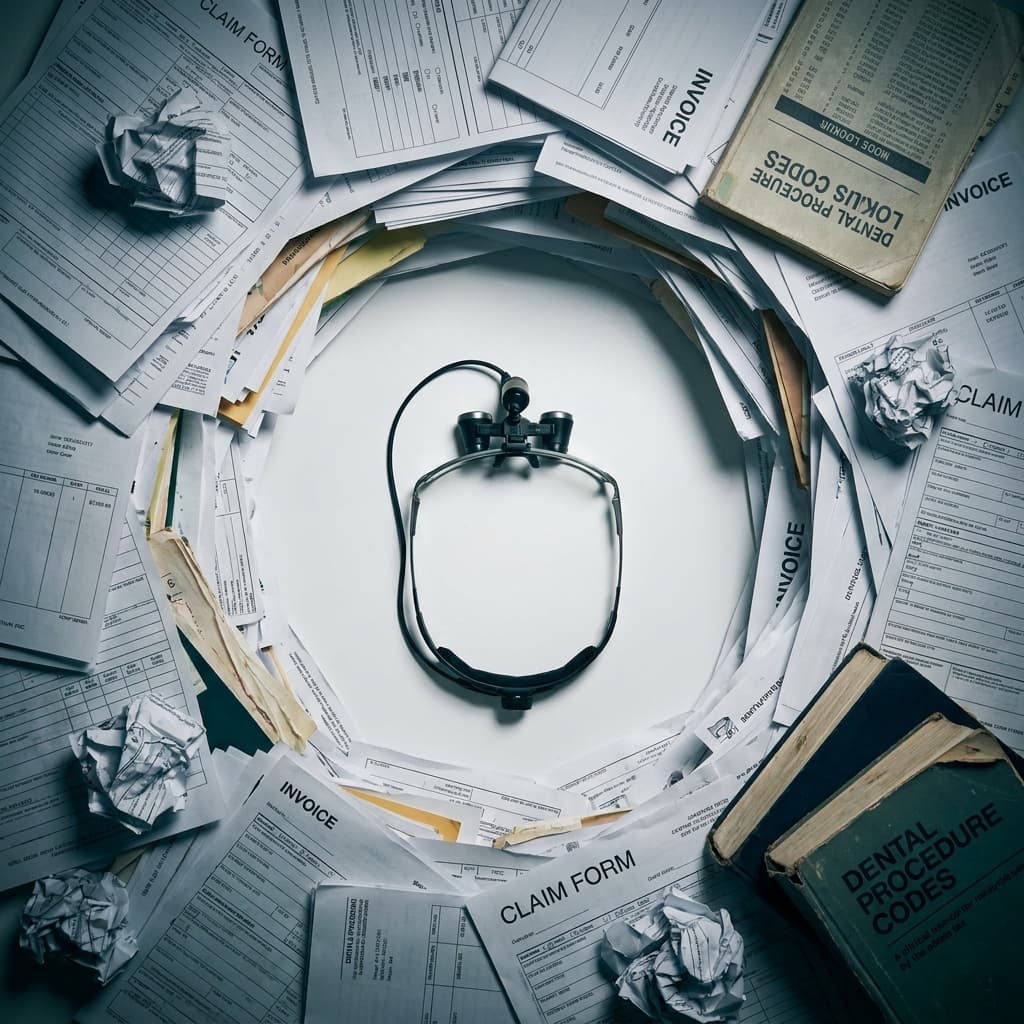
The best available time studies put a dentist's clinical note at 7.1 minutes for an adult, a specialist referral letter at 13.1 minutes, and a prescription at 7.9 minutes — before the treatment plan, the medical-aid claim, the eligibility check, and the follow-up on the ones that were rejected.

Manual medical-aid benefit verification averages 12 to 24 minutes per patient once follow-up is included. Reworking a rejected claim costs the practice around R500 every time — and industry data suggests up to 86% of denials were avoidable in the first place.

None of this is dentistry. It is paperwork wrapped around the dentistry — and it is what a new era of practice management is designed to remove.
Where the minutes go

Six admin blocks. One approval step each. All under one roof.

Each block below is a job dentists do every day. ProClinic is designed to prepare it — then wait for your signature.

Structured clinical note with Working Lengths, Intracanal Medicament, Prescriptions, Post-Operative Instructions, and Treatment Plan sections
01

The clinical note

Ambient capture at the chair, transcribed and structured into a full clinical note by the time the visit ends. Nothing typed by memory at 8pm.

Treatment plan showing itemised SADA-coded procedures with amounts in ZAR
02

The treatment plan

Patient-facing document — diagnosis rationale, itemised SADA-coded quote, and patient education. Designed to be presentation-ready by the time the patient stands up.

Referral letter modal with specialist type dropdown and optional specialist name field, ready to generate
03

The referral & letter

Speciality-aware, drawn from the visit's clinical context and the patient's medical history. Designed so every referral is faster to complete and more complete by design.

Prescription drafted with allergy and interaction safety checks, waiting for the clinician’s approval
04

The prescription

Every script cross-referenced against allergies, contraindications, and the patient’s medical history — with human approval gates before you sign.

Invoice built from approved SADA codes, ready for claim submission
05

The SADA-coded invoice

Codes assembled from the approved plan, not typed from memory. Ready for the claim in the same click.

Financial dashboard showing claim status and reconciliation
06

The claim

From Q4 2026, medical-aid switching. When a claim is denied, ProClinic is designed to adjust and resubmit against the scheme's own rules — so denial is an event the platform absorbs, not a manual cascade for reception.

The hours back

Where the day goes when the admin gets out of the way.

A transparent model, built on published research. For a general dentist seeing 8 to 12 patients a day, with each generated clinical note designed to save around 9 minutes of documentation and admin, the platform is designed to return around 90 minutes of clinical time per dentist per day.

The anchor

≈ 90 min

of clinical time back per dentist per day

≈ 7.5 hours / week · ≈ 30 hours / month · 3–6 extra short slots per week

How we get there

8–12 patients

a day, at around 9 minutes saved per visit

Ambient capture, structured clinical note, treatment plan, script, referral, invoice, and claim — each designed to be prepared for approval, not typed from memory.

ProClinic internal modelling, drawing on peer-reviewed dental time-and-motion research, published ambient-AI documentation trials, a peer-reviewed dental patient-education AI study, and CAQH claims-workflow data. Designed to describe the size of the opportunity for a general dental practice — not a per-practice guarantee. Dentists elsewhere in the world can substitute their own patient volume against the same 9-minutes-a-visit anchor.

Where would you spend it?

See more patients.

Seven and a half hours a week is roughly 3–6 short appointments you didn't have room for.

Grow the practice.

The same hours, spent on marketing, hygienist recall, or a second chair.

Live your life.

Some hours are worth more than money. Take them home.

The revenue impact

What that time can be worth.

For a South African general dentist, chair time — triangulated across SADA-aligned scheme tariffs, aggregate scheme benefit spend, and dentist income surveys — is conservatively worth R650 to R1,550 per hour of production, with a central estimate of around R950 per hour. ProClinic internal modelling, not a guarantee — dentists elsewhere in the world can substitute their own local rate.

Applied to the 90-minute anchor:

Per day

≈ R1,425

1.5 hours recovered × R950/hr

Per week

≈ R7,125

5 clinical days

Per year

≈ R327,000

46 clinical weeks of chair capacity

ProClinic internal modelling using publicly-sourced South African chair-time rates. A busy urban practice reads meaningfully higher; a paediatric or hygiene-heavy day reads lower. A dentist in another country can plug in their own local rate against the same 90-minute anchor.

The hidden levers

Time is one lever. There are four more.

Fewer denied claims

Independent research on a large dental insurer found 72.88% of claim denials were administrative — not clinical. Industry data puts up to 86% of denials as avoidable. From Q4 2026, ProClinic is designed to catch those errors before submission and, when denied, adjust and resubmit against the scheme's own rules.

More plans that actually happen

Practice-analytics data across large dental cohorts finds the average case-acceptance rate sits around 45%, while top-decile practices reach 75%. Peer-reviewed dental patient-education AI cuts chair-time explaining plans by roughly half. ProClinic delivers every plan to the patient's portal — designed to make case acceptance a document a patient can read at home.

Fewer no-shows

A Scottish NHS dental randomised trial found SMS reminders cut failed attendance from 31% to 14%. ProClinic sends multi-channel reminders on autopilot today and, from Q4 2026, is designed to require patient confirmation on the portal.

Safer records, safer prescribing

Full-consultation transcription means findings and patient-mentioned context are captured live — not typed from memory between patients. Every prescription is checked against allergies and interactions. And the social-history tab keeps track of what patients mention, so the next visit feels personal.

Coming next

The roadmap that makes the day even better.

Q3 2026 · Live

Launch platform

Ambient capture. Structured clinical documentation. SADA + ICD-10 coding. Prescription and referral agents. Invoicing. Human approval gates. Full audit trail.

Q4 2026

Practice growth

Medical-aid switching with automatic resubmission on denial. Lab notes. Multi-practice. AI business analytics — ProClinic Coach. Integration with leading SA accounting platforms.

Q1 2027

ProClinic Medical

The same platform, adapted for medical general practice. Same verified knowledge base. Same human approval gates. Same audit trail.

ProClinic Coach is a working title for our AI business-analytics agent. Name subject to change ahead of public release.

Around 90 minutes of clinical time back per dentist per day.

ProClinic is designed to give it back. Founder-partner onboarding opens the week the platform launches at SADA 2026 — Stand S53, CTICC Cape Town, 21–23 August.